
Introduction: The Cost of Choosing the Wrong Fabric
For B2B importers and brand managers, fabric selection is not just about aesthetics—it is about Complaint Rates (RMA) and Brand Reputation.
In the outdoor furniture industry, fabric failure (fading, tearing, or mildew) is the #1 reason for customer returns. As we look toward the 2026 sourcing season, the market is shifting. Buyers no longer just want “cheap”; they want “durable sustainability.”
At IgerEnjoy, we believe in radical transparency. Whether you are sourcing for a high-end resort in the Maldives or a promotional campaign in Europe, understanding the chemical and physical differences between Acrylic, Olefin, and Polyester is critical.
This guide defines the “Big Three” umbrella fabrics, compares their technical specs (ASTM/ISO), and helps you match the right material to your specific market audience.
1. The Contenders: Pros, Cons, and Material Science
To understand performance, we must look at how the yarn is created. The biggest differentiator in 2026 is Solution Dyeing vs. Piece Dyeing.
A. Acrylic (100% Solution-Dyed) – The “Gold Standard”
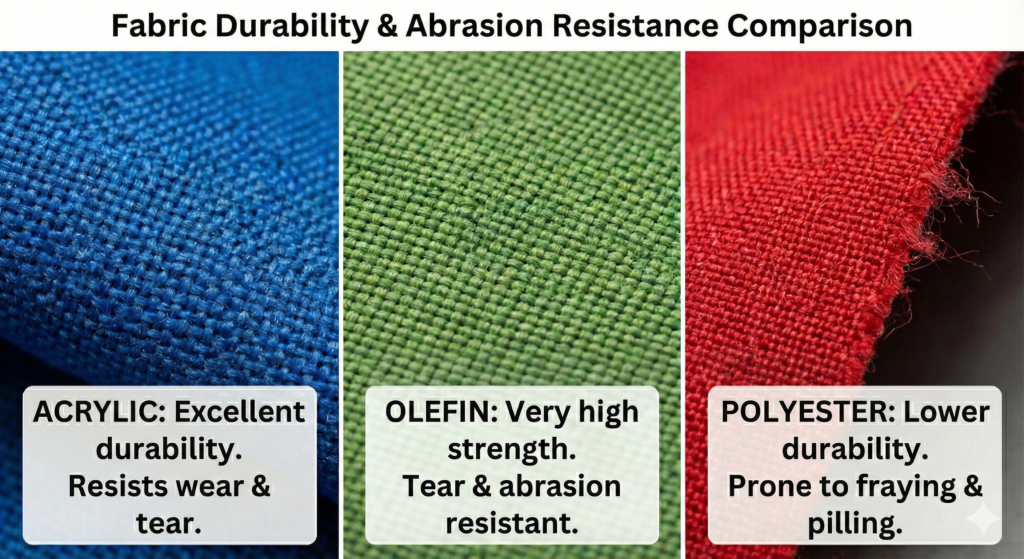
Acrylic is a synthetic fiber that most closely mimics the soft hand-feel of cotton but with plastic-like durability.
The Technology: The color pigments are mixed into the liquid polymer before the fiber is extruded (like a carrot, orange all the way through).
Pros:
Superior UV Resistance: Typically rated 1,500–2,000+ hours (AATCC 16E).
Breathability: Weave structure allows heat to escape, keeping the area under the umbrella cooler.
Mold/Mildew Resistant: Naturally hydrophobic.
Cons: Highest price point; static electricity can be an issue in dry climates.
2026 Trend: Increased demand for recycled acrylic blends to meet EU sustainability compliance.
B. Olefin (Polypropylene) – The “Smart Choice”
Olefin has emerged as the fastest-growing fabric in the mid-to-high-end market. It is a byproduct of oil refining, making it surprisingly eco-friendly to produce (low water waste).
The Technology: Also solution-dyed. It is lighter than water and extremely tough.
Pros:
Excellent Value: Offers 80-90% of Acrylic’s performance at 50-60% of the cost.
Abrasion Resistance: Highly resistant to wear and tear.
Fast Drying: Does not absorb moisture (0.01% absorption rate).
Cons: Heat sensitive (cannot be ironed); limited texture variety compared to Acrylic; slightly “waxy” hand-feel.
C. Polyester – The “Budget Chameleon”
Polyester is the most misunderstood fabric because it comes in two vastly different quality levels.
Level 1: Staple/Piece-Dyed Polyester (Standard): White yarn is woven and then dipped in dye.
Pros: Cheapest option; vibrant colors initially.
Cons: Fades rapidly (200-300 UV hours); prone to degradation.
Level 2: Solution-Dyed Polyester (SDP):
Pros: Significantly better colorfastness (500-1,000 hours) than standard poly; stronger tensile strength.
Cons: Still retains heat more than Acrylic; heavier weight.

2. Market Analysis: Which Fabric Fits Your Business Model?
As a factory, we often see clients over-spec (wasting money) or under-spec (risking reputation). Here is our recommendation based on buyer personas:
Scenario A: The Luxury Hotel / Commercial Project
Target Audience: 5-Star Resorts, Cruise Lines, High-End Villa Designers.
Priority: Longevity, premium feel, 5-year warranty requirements.
Recommendation: 100% Solution-Dyed Acrylic.
Why: These umbrellas stay open 365 days a year. The labor cost to replace a faded canopy outweighs the material savings of cheaper fabric.
Our Solution: We source premium acrylics comparable to Sunbrella/Agora standards.
Scenario B: The Mid-Range Retailer / Garden Center
Target Audience: Homeowners, Costco/IKEA style shoppers, E-commerce (Amazon/Wayfair).
Priority: Balance of Price and Performance. “Good for 2-3 seasons.”
Recommendation: Olefin (190g – 220g) or High-Grade Solution-Dyed Polyester.
Why: Consumers want fade resistance but are price-sensitive. Olefin offers the “Non-Fading” marketing claim without the premium Acrylic price tag.
2026 Insight: Olefin is trending heavily here due to its lower carbon footprint, appealing to eco-conscious Gen Z and Millennial buyers.
Scenario C: Promotional / Event / Giveaway
Target Audience: Beverage brands (beer/soda companies), Event organizers, Budget Supermarkets.
Priority: Lowest Unit Price, Logo Clarity, Short-term use.
Recommendation: Standard Polyester (160g – 180g).
Why: These umbrellas are often used for a few weeks or a single season. Long-term UV stability is not required.
Warning: Do not use this for permanent outdoor installations.
3. The Technical Comparison Matrix (2026 Updated)
For the technical buyers, here is how the data stacks up. All values are based on general industry standards (ASTM/ISO) utilized at Nissi Tech.
| Feature | Acrylic (Solution Dyed) | Olefin (Polypropylene) | Polyester (Solution Dyed) | Polyester (Standard) |
| Colorfastness (USA) | 2000+ Hours (Grade 4-5) | 1000-1500 Hours (Grade 4) | 500-800 Hours (Grade 3-4) | <300 Hours (Grade 2) |
| Warranty (Avg) | 5 – 10 Years | 2 – 3 Years | 2 – 3 Years | 3 – 6 Months |
| Water Repellency | High (Hydrophobic) | High (Non-absorbent) | Medium (Needs coating) | Low (Needs coating) |
| Hand Feel | Soft, Canvas-like | Smooth, Waxy | Synthetic, Crisp | Synthetic, Soft |
| Eco-Impact (2026) | Moderate (Recyclable) | Best (Low waste production) | Good (If rPET used) | Poor (Fast fashion waste) |
| Best Use Case | Commercial / Luxury | Residential / Retail | Residential | Promo / Seasonal |
Factory Note: At IgerEnjoy, we can apply additional PA/PU coatings to Polyester to improve water pressure resistance (up to 800mm), bridging the gap for rainy climates like the UK or PNW.
Conclusion: Sourcing the Right Fabric for 2026
There is no “bad” fabric, only the “wrong application.”
Choose Acrylic for prestige and permanence.
Choose Olefin for the best ROI and eco-marketing.
Choose Polyester for cost-driven volume.
Ready to see the difference?
IgerEnjoy has prepared a 2026 Fabric Sample Kit, featuring swatches of all three materials, including our new “Eco-Olefin” line.
[Contact Our Team] to request your sample kit and discuss your 2026 production plan.