
Executive Summary / TL;DR
In the 2026 B2B sponsorship and outdoor event marketing sector, stamping a single logo on the top of a generic patio umbrella is a severe misallocation of marketing budget. Advertising agencies and corporate procurement teams must partner with a specialized, vertically integrated custom commercial patio umbrella manufacturer capable of deep structural micro-customization. The commercial benchmark for premium brand assets now strictly requires engineered vertical valances for eye-level exposure, overlapping double canopy vents supported by dual-frame structures, and 6mm solid fiberglass ribs paired with electrophoretic hardware.
Relying on standard promotional umbrellas from generic trading companies guarantees visual blind spots at pedestrian level, severe pattern misalignment, and rapid hardware degradation under coastal wind loads. By integrating a brand’s exact visual identity (VI) into the physical architecture of the canopy and the metal skeleton, B2B importers transform a basic, disposable shade structure into a high-retention, multi-season commercial marketing asset.
Explore IgerEnjoy’s Commercial Patio Umbrella Customization Capabilities.
Beyond the Basic Logo: The ROI of 360-Degree Visual Architecture
Standard center-canopy logos suffer from severe visual blind spots at pedestrian eye level; true 360-degree visual architecture requires integrating brand identity directly into vertical valances, internal ribs, and aerodynamic vents to ensure absolute visibility from all horizontal and vertical angles.
For PR agencies, corporate sponsors, and outdoor event coordinators, deploying standard promotional umbrellas results in immediate visual failure and poor Return on Investment (ROI). When a standard dome umbrella is fully opened, the pitch of the canopy naturally points the primary printed logo upward toward the sky. Pedestrians walking past a trade show booth, or VIP guests sitting directly underneath the canopy, cannot physically see the brand’s primary graphic.
To solve this geometric limitation, a primary source factory approaches the umbrella not as a functional sunshade, but as a multi-dimensional billboard. “Structural micro-customization” means we engineer the fabric cutting matrices and the internal hardware components to actively display the brand. By utilizing the vertical drop of the fabric (valances) and the internal mechanical skeleton, we guarantee continuous brand exposure whether the target audience is 50 feet away, walking directly adjacent to the umbrella, or seated beneath it. This structural approach ensures that every dollar spent on physical marketing assets translates into visible impressions.
Valance Engineering: Eye-Level Real Estate & Sublimation Precision
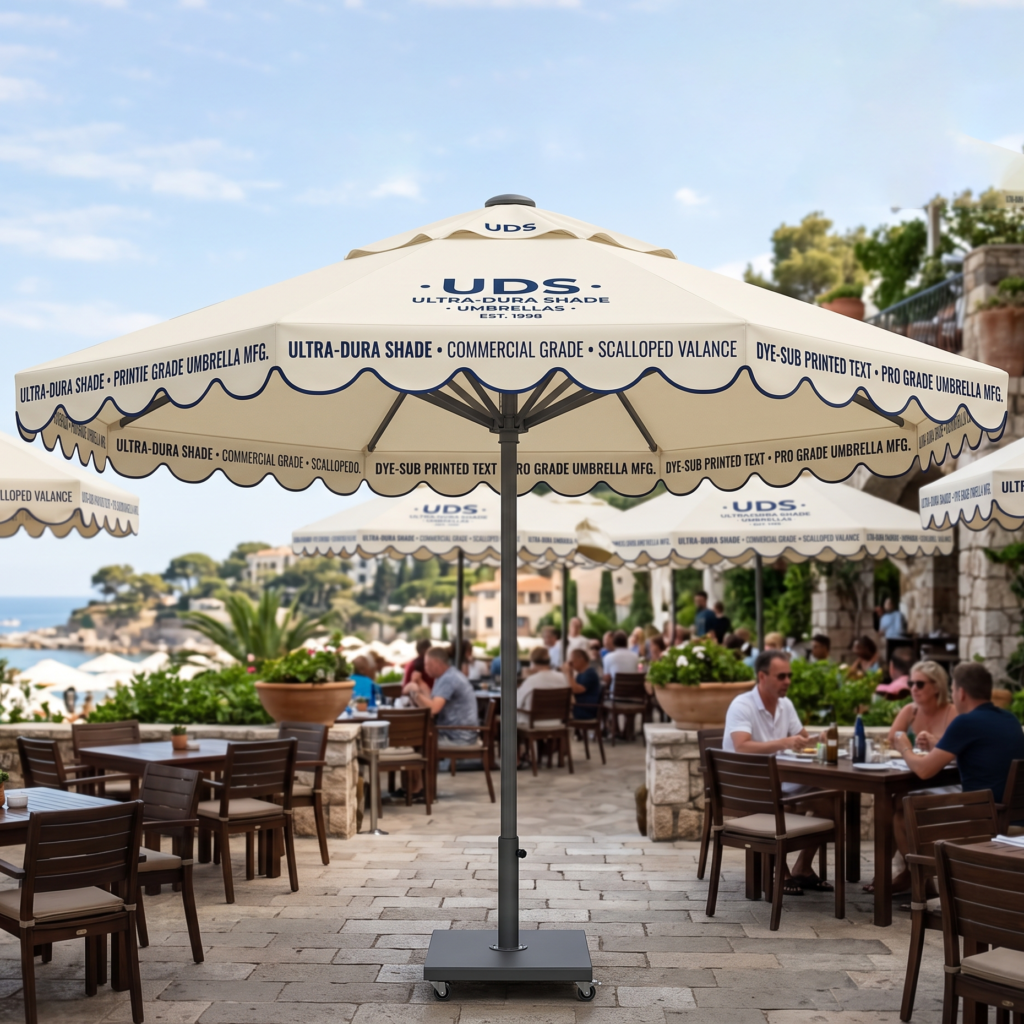
The umbrella valance serves as the optimal eye-level advertising space. Factory-level OEM engineering allows for straight edges to match minimalist corporate branding, or scalloped edges for classic hospitality aesthetics, both demanding strict tension control and precision dye-sublimation to prevent text distortion.
A valance is the 15cm to 20cm (6 to 8 inches) vertical strip of fabric hanging directly from the perimeter of the umbrella’s main canopy. Because it hangs at a strict 90-degree angle to the ground, it perfectly intercepts the natural line of sight of passing foot traffic. For corporate sponsors, this specific fabric real estate is highly valuable for printing clear, legible Website URLs, QR codes, or secondary brand slogans that would otherwise clutter the main triangular panels.
The Manufacturing Challenge: Preventing Valance Curling
Fabricating a commercial valance requires strict mechanical tension control. If a factory uses substandard sewing techniques, thin threads, or unbalanced binding tape, the valance will physically curl, warp, or flare outward over time, rendering the printed text completely unreadable.
At IgerEnjoy, we solve this through industrial sewing mechanics. We utilize walking-foot sewing machines that feed the heavy-duty 600D Oxford fabric and the edge binding tape at the exact same rate, eliminating tension mismatch. Furthermore, procurement buyers must specify the structural cut based on their client’s brand demographic:
Straight Edge: Features a clean, sharp horizontal line. It maximizes printable surface area and provides a sleek, rigid geometry. This is the absolute standard for technology companies, automotive brands, and modern beverage sponsors.
Scalloped Edge: Features a repeating curved cut, meticulously finished with customized heavy-duty binding tape. This is the mandatory specification for luxury beach clubs and high-end coastal resorts aiming for a boutique, vintage aesthetic.
Double Canopy Vents: Fusing Aerodynamic Stability with Brand Color-Blocking
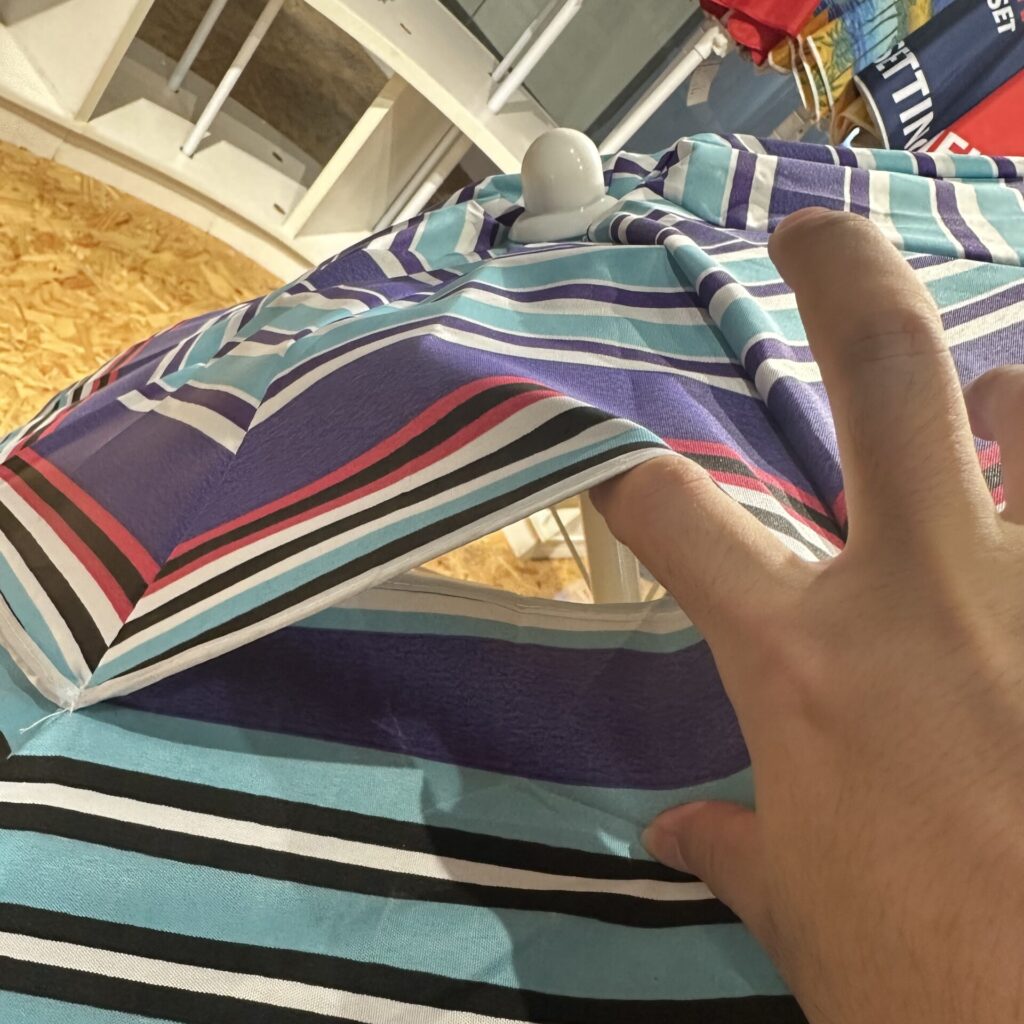
To prevent structural failure under 30+ MPH wind loads, commercial canopies mandate top aerodynamic vents; however, advanced OEM execution utilizes an overlapping double canopy vent to function both as a critical wind pressure release valve and a highly visible canvas for contrasting Pantone color-blocking.
Outdoor events frequently encounter sudden microbursts. A fully enclosed, traditional umbrella canopy acts identically to a parachute, trapping upward aerodynamic lift. This intense physical force will instantly invert a cheap promotional umbrella or snap standard hollow steel ribs. Vents are structurally necessary to allow trapped air to escape, rapidly equalizing the barometric pressure between the underside and the top of the canopy.
For marketing and advertising agencies, this structural necessity presents a highly unique branding opportunity. Instead of a monochromatic dome, a custom commercial patio umbrella manufacturer can execute a striking contrasting color-block design. By specifying a primary brand color for the main canopy (e.g., Corporate Navy Blue) and a secondary vibrant brand color for the top vent layer (e.g., Signal Orange or Neon Green), the umbrella achieves a distinctive, custom-engineered aesthetic that commands attention from across a crowded festival venue.
IgerEnjoy Factory Insider Insight:
When requesting “vented umbrellas,” buyers must be extremely cautious of structural misrepresentation. Cheap trading companies often take a standard beach umbrella design—which utilizes a basic single-layer frame with a sewn-in fabric vent (a simple fabric overlapping fabric cutout)—and attempt to sell it at a premium as a “heavy-duty commercial patio umbrella.” While sewn vents are perfectly functional for lightweight beach use, they lack the structural rigidity required for commercial patio wind loads.
At IgerEnjoy, we engineer based on the exact deployment. For true commercial patio umbrellas, we upgrade from a single frame to a dual-frame fiberglass structure (main ribs + secondary top ribs). The top canopy tier is independently supported by its own dedicated fiberglass ribs, overlapping the bottom tier by a strict 15cm to 20cm margin. This exact calculated geometry allows high-velocity wind to escape horizontally without stressing the fabric seams, while gravity ensures 100% waterproof performance during severe downpours.
The Internal Experience: 6mm Solid Fiberglass Ribs & Electrophoretic Metals
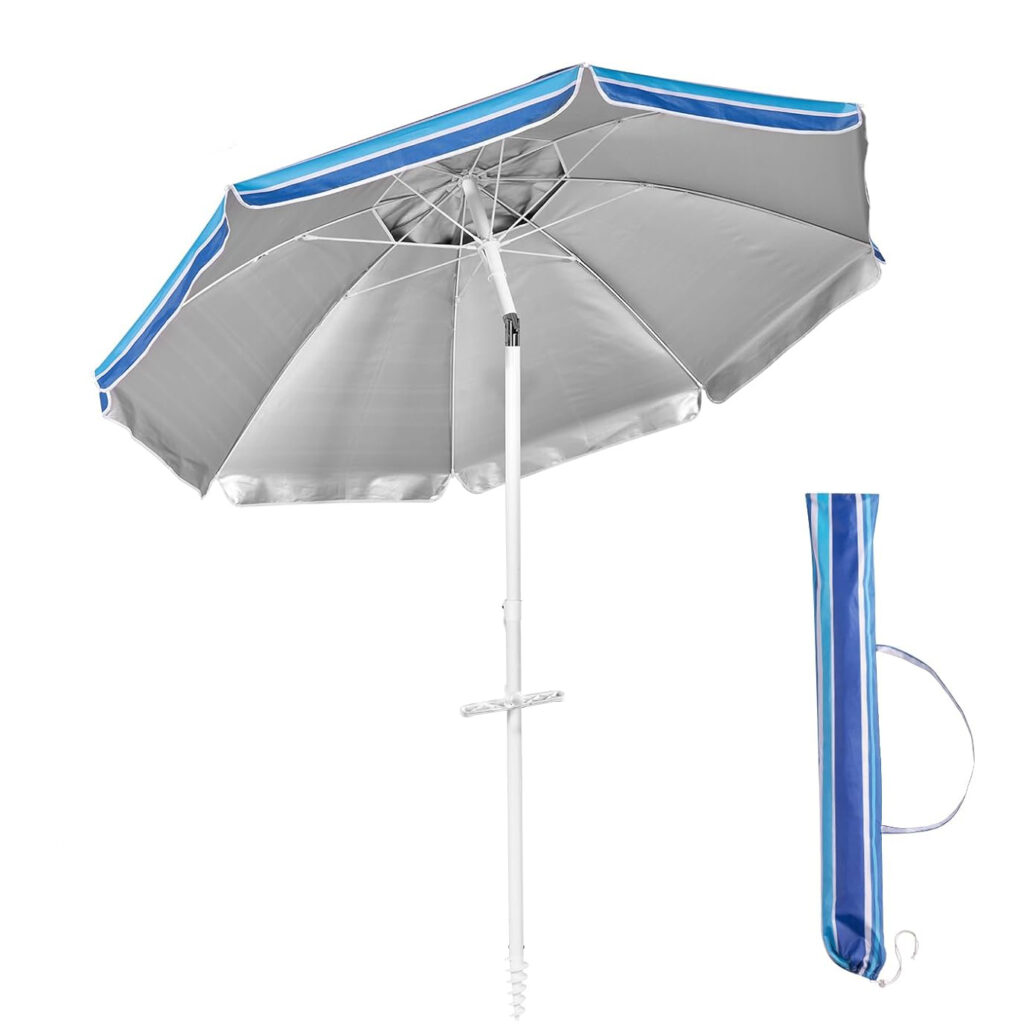
When a consumer is seated beneath the umbrella, their absolute visual focus shifts to the internal skeleton. Premium OEM factories maximize this exposure by applying matte electrophoretic finishes to the central pole and integrating high-flexibility 6mm solid fiberglass ribs in standard architectural colors (like sleek black) to create a premium visual contrast.
Standard promotional umbrellas ignore the interior environment entirely, leaving exposed shiny zinc-plated steel or basic silver aluminum. This subconsciously signals a low-budget, disposable product to the end-user. For high-end hospitality brands and premium beverage sponsors, the internal architecture must reflect a cohesive, high-end aesthetic.
To achieve this level of execution, the manufacturing process focuses on structural integrity and sleek contrast:
Electrophoretic Pole and Hub Finishing: For the central structure, we strictly utilize 1.0mm to 1.2mm wall-thickness aluminum center poles paired with heavy-duty hubs. This 1.0mm-1.2mm specification provides the mathematically optimal strength-to-weight ratio for commercial patio use. It is robust enough to prevent buckling under wind loads, yet lightweight enough to keep ocean freight costs down and allow for easy daily setup by hospitality staff. Furthermore, instead of basic powder coating that chips easily, we apply electrophoresis (e-coating). This industrial process deposits a highly durable matte layer (such as Matte Black) that penetrates all micro-crevices. This coating passes the ASTM D3359 Cross-Cut Tape Test, providing extreme corrosion resistance while delivering a premium, non-reflective aesthetic.
6mm Solid Fiberglass Ribs: Commercial standards require ultimate fatigue resistance and wind deflection. At IgerEnjoy, we strictly utilize 6mm solid fiberglass ribs. Why 6mm? It provides the mathematically optimal balance between structural rigidity and flexural yield strength (the ability to bend under sudden wind and instantly snap back). Furthermore, we utilize standard architectural rib colors (typically deep black or crisp white). Maintaining standard resin colors ensures the highest concentration of UV inhibitors and maximum tensile strength, avoiding the structural degradation and high MOQs associated with custom resin dyeing, while providing a sharp, luxurious contrast against the custom-printed canopy above.
The Ad Agency OEM Workflow: From 3D Prototyping to Fabric Strike-offs
For advertising agencies representing Fortune 500 clients, placing a wholesale order requires rigorous visual proofing. A reliable custom manufacturer must provide a structured OEM workflow that eliminates all guesswork regarding Pantone color matching and pattern alignment before mass production begins.
At IgerEnjoy, we integrate seamlessly with agency procurement teams through a strict three-step prototyping protocol:
3D Architectural Rendering: Before any fabric is cut, our engineering team provides high-resolution 3D renders displaying the specific straight or scalloped valance geometry, the double-vent color-blocking, and the exact logo placement to ensure there are no visual blind spots.
Fabric Strike-offs: Screens and digital monitors notoriously misrepresent colors. We utilize calibrated dye-sublimation printers referencing the Pantone Matching System (PMS). We print physical 30cm x 30cm fabric swatches (strike-offs) and ship them directly to the agency for physical sign-off, ensuring the corporate colors are 100% accurate under natural sunlight.
Hardware Finish Samples: We provide physical samples of the electrophoretic aluminum and the 6mm fiberglass ribs, allowing the client to physically feel the matte texture and verify the structural rigidity.
This meticulous, factory-direct workflow protects the agency’s relationship with their client, ensuring the final mass-produced commercial umbrellas exactly match the approved design proofs.
Conclusion & Actionable Next Steps
Deploying standard promotional umbrellas built with 0.6mm steel poles and single-color silk screening actively diminishes brand equity and guarantees physical failure under coastal wind loads. To ensure maximum 360-degree visibility, marketing agencies and corporate procurement teams must partner directly with a vertically integrated custom commercial patio umbrella manufacturer.
By engineering the brand identity directly into the physical architecture—utilizing dye-sublimated valances, overlapping double canopy vents supported by a dual-frame structure, and electrophoretic 1.2mm aluminum hardware with 6mm fiberglass ribs—importers transform a basic shade structure into a high-retention commercial asset.
Ready to engineer your next branded commercial umbrella?
Contact the OEM engineering and sales team at IgerEnjoy today to request our full fabric specification sheets, physical fabric strike-offs, and customized 3D rendering design proposals.
Frequently Asked Questions (FAQ)
Q1: Why are valances necessary for custom commercial patio umbrellas?
A: Standard dome umbrellas point the primary logo toward the sky, creating a severe visual blind spot. A valance provides a vertical strip of fabric hanging at a 90-degree angle to the ground. This intercepts the natural line of sight, maximizing eye-level brand exposure and providing dedicated space for clear, dye-sublimated URLs and marketing slogans without cluttering the main canopy.
Q2: Will a double-vented commercial umbrella leak during heavy rain?
A: A properly engineered overlapping double canopy will not leak, but the internal structure matters. Standard beach umbrellas use a simple sewn-in fabric vent on a single frame, which can sometimes sag and let water in under heavy downpours. However, for commercial patio umbrellas, a reliable manufacturer like IgerEnjoy upgrades to a dual-frame fiberglass structure. The top canopy tier is independently supported by secondary ribs, overlapping the bottom tier by 15cm to 20cm. This rigid, dual-level geometry allows horizontal wind to escape while physically preventing vertical rainfall from penetrating the canopy structure.
Q3: Why do premium commercial patio umbrellas use 6mm solid fiberglass ribs instead of aluminum or steel?
A: Aluminum and hollow steel ribs possess low yield strength, meaning they will permanently bend or snap under sudden coastal wind gusts. A reliable custom manufacturer utilizes 6mm solid fiberglass ribs because they act as shock absorbers. The 6mm diameter is the optimal engineering standard, allowing the rib to bend significantly to dissipate aerodynamic pressure and instantly recover its original straight shape once the wind drops. We use standard architectural colors (like black) for the ribs to ensure maximum UV-inhibitor stability and tensile strength, creating a sleek contrast with the branded canopy.
Q4: How does a factory ensure accurate brand colors on printed canopies?
A: Professional manufacturers use the Pantone Matching System (PMS) combined with advanced dye-sublimation printing. Before mass production, the factory provides a physical fabric “strike-off” (a printed fabric swatch) for the client to review in person. This ensures the corporate colors are rendered perfectly on the specific heavy-duty Oxford material under natural lighting.