
Many supermarkets, retail chains, and independent outdoor brands operate under a dangerous assumption: securing the lowest FOB (Free on Board) price guarantees the highest profit margin. In the beach umbrella manufacturing sector, this equation fundamentally fails.
When you source bottom-tier beach umbrellas to maximize initial markup, the back-end costs quietly destroy your net profit. During peak summer seasons, the return rate for substandard outdoor gear can easily spike to double digits. A beach umbrella that snaps in a moderate coastal breeze doesn’t just result in a refund; it triggers negative Amazon reviews, damages retail buyer trust, and incurs heavy reverse logistics costs.
As a source factory, IgerEnjoy looks at outdoor products through the lens of a Bill of Materials (BOM) and structural physics. This guide breaks down the true cost components of wholesale beach umbrellas, showing B2B buyers how to strategically specify materials to control pricing, reduce return rates to near zero, and protect brand equity.
The Margin Killer: Hidden Costs in “Cheap” Wholesale Beach Umbrellas
The price gap between a $5 and a $15 wholesale beach umbrella isn’t just factory profit—it is the physical difference between a disposable prop and a functional structural product. B2B buyers must understand where the cheap units fail.
High Return Rates and Brand Damage
The most common point of failure for retail beach umbrellas happens within the first 72 hours of use. A 15mph coastal gust creates a massive sail effect on a 6.5ft canopy. If the factory used 0.3mm recycled steel ribs, the frame will invert and snap at the notch. For independent brands building direct-to-consumer (DTC) channels, a single 1-star review complaining about a snapped pole costs more to offset in marketing spend than the few dollars saved on frame upgrades. The true cost of a cheap umbrella includes the loss of customer Lifetime Value (LTV).
Packaging and Transit Damage
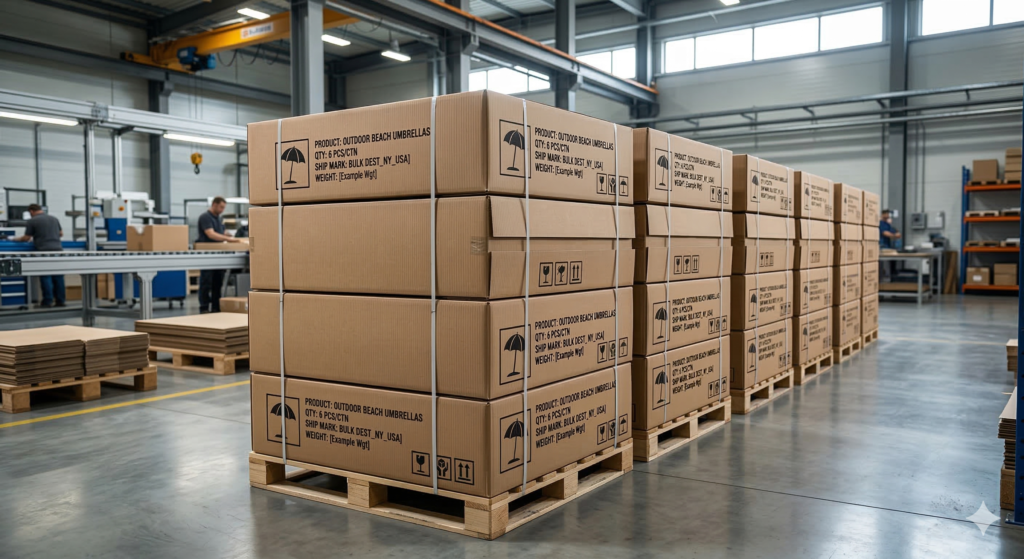
A frequently ignored BOM line item is the export carton. Low-cost suppliers often use standard 3-ply cardboard with zero internal bracing. After ocean freight vibration, warehouse handling, and last-mile delivery, the heavy metal poles can easily punch through the ends of the carton, scratching the coating or tearing the fabric. Upgrading to a 5-ply corrugated master carton with reinforced end-caps might add a fractional cost per unit, but it eliminates the standard 3% to 5% transit damage rate that directly eats into retail margins.
Frame Construction BOM: Justifying Your Retail Price Tag
The structural integrity of a beach umbrella dictates its retail positioning. Whether you are stocking supermarket aisles for seasonal promotions or building a premium boutique brand, the frame specifications must align with the retail price tag.
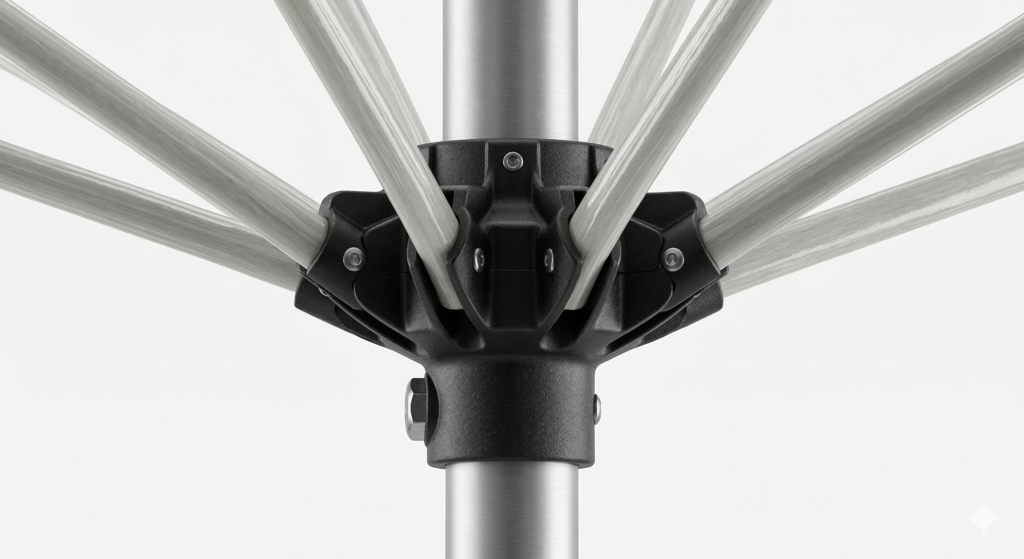
Steel vs. Aluminum vs. Fiberglass Specs
The core frame consists of the center pole and the ribs. Modifying the wall thickness (gauge) and material directly impacts weight, wind resistance, and cost.
Carbon Steel: Suitable for high-volume, low-cost retail. However, a minimum wall thickness of 0.5mm (typically 28/32mm pole diameter) is mandatory to prevent bending during insertion into the sand. Standard powder coating is required to delay rust, though it will inevitably corrode in salty environments.
Marine-Grade Aluminum: The standard for mid-to-high-end brands. 6000-series aluminum with a 1.0mm+ wall thickness offers a superior strength-to-weight ratio and natural rust resistance, easily justifying a premium retail price.
Solid Fiberglass Ribs: The ultimate solution for high-wind coastal areas. Unlike hollow metal ribs that crimp and break, 6mm or 8mm solid fiberglass ribs flex under wind pressure and return to their original shape.
B2B Procurement Guide: Frame Material Comparison
| Material Configuration | Wind Resistance Yield | Rust/Corrosion Probability (Saltwater) | Weight Profile | Relative Cost Index | Best B2B Application |
| 0.3mm Steel Tube + Wire Ribs | Low (Snaps easily) | High (3-6 months) | Heavy | Low ($) | Dollar stores, disposables |
| 0.5mm Steel Tube + Fiberglass Ribs | Medium-High | High on pole, None on ribs | Medium | Moderate ($$) | Supermarket seasonal promos |
| 1.0mm Aluminum + Solid Fiberglass | Very High (Flexes) | Minimal (Anodized/Coated) | Light | Premium ($$$) | Independent brands, high-end retail |
The Importance of Hardware and Connectors
The runner (the part that slides up the pole) and the notch (top hub) take the highest mechanical stress when opening the canopy. To cut costs, many factories inject these parts using recycled plastics. Recycled plastic suffers from severe UV embrittlement and cold-weather cracking, causing the umbrella to literally fall apart in the user’s hands.
Specifying Virgin Engineering Plastics (such as high-impact Nylon or pure PP) for all molded joints ensures the mechanical integrity of the umbrella over thousands of deployment cycles. The cost difference at the factory level is mere cents per unit, but the reduction in warranty claims is massive.
Canopy Fabric Sourcing: Stop Paying for “Fake” UV Protection
For independent brands and retail buyers, the canopy is the billboard for your brand. However, B2B buyers frequently fall into the trap of sourcing umbrellas with fabricated UPF50+ claims. A substandard canopy doesn’t just result in color fading; it leads to fabric brittleness and catastrophic tearing within a single summer season.
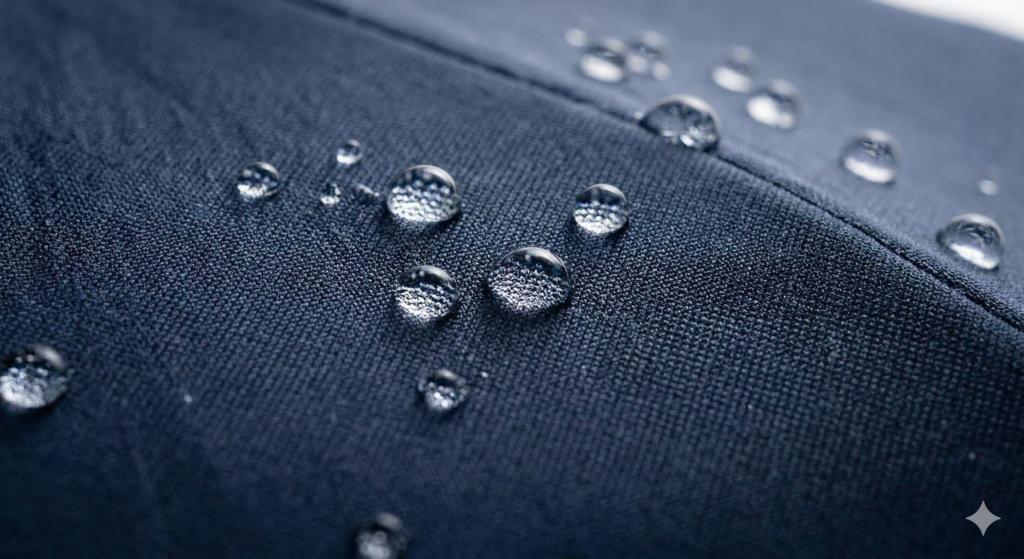
Fabric Weight (GSM) and Coating Realities
The baseline metric for canopy durability is Grams per Square Meter (GSM). Many low-cost suppliers quote 160g standard polyester to keep the FOB price artificially low. While 160g fabric can be chemically treated for UV resistance, this basic surface treatment degrades rapidly under intense ultraviolet radiation and sea salt exposure.
To achieve legitimate, long-lasting UPF50+ protection, buyers must upgrade to at least 220g polyester with multi-pass silver or black polyurethane (PU) backing. The thicker the fabric substrate, the higher the tensile strength against coastal winds. The cost variance at the factory level between a 160g raw polyester canopy and a 220g heavy-duty coated canopy is relatively small—often less than $1.50 per unit—but this single specification prevents the negative reviews associated with “sunburns through the umbrella” and fabric dry-rot.
Print Durability for Brand Identity
When retail brands print their logos on outdoor gear, colorfastness is critical. Sourcing cheap screen printing (which applies a layer of ink on top of the fabric) often results in the logo cracking and peeling after a few weeks of thermal expansion and contraction in the sun.
For high-end retail configurations, Digital Heat Transfer (Dye Sublimation) is the required standard. This process uses heat to bind the ink directly into the fabric’s polymer fibers, rather than sitting on the surface. The result is a high-fidelity, fade-resistant print that maintains brand integrity even after heavy UV exposure.
B2B Procurement Guide: Fabric & Print Technology Matrix
| Fabric & Coating Spec | Printing Method | Colorfastness (AATCC 16 Std) | UV Protection Longevity | Factory Cost Variance | Best B2B Application |
| 160g Poly (No Coating) | Basic Screen Print | Grade 2-3 (Fades in 1 month) | Very Low | Baseline ($) | Promotional giveaways |
| 220g Poly (Silver Coated) | High-Density Screen | Grade 3-4 (Lasts 1 season) | Medium-High | +$0.80 – $1.20 | Supermarket retail |
| 220g Poly (Black PU Coated) | Digital Heat Transfer | Grade 4+ (Highly resistant) | Maximum (UPF50+) | +$2.00 – $3.50 | Independent DTC brands |
| Solution-Dyed Acrylic | Woven (No print needed) | Grade 5 (Multi-year durability) | Maximum | Premium ($$$) | Luxury boutique resorts |
The Retail ROI: Sourcing Strategy for B2B Buyers
Profitable outdoor gear retail is not about finding the absolute lowest factory price; it is about “Value Engineering.” B2B buyers must calculate the total landed cost against the projected return rate to find the actual net margin.
The Race to the Bottom vs. Value Engineering
Consider a standard procurement simulation:
If a buyer sources a bottom-tier umbrella at an FOB of $6.00 to retail for $24.99, the paper margin looks excellent. However, if the use of 0.3mm steel and 160g fabric results in a high return rate during peak season, the reverse logistics, unsellable inventory, and customer service labor will completely erase the profit pool.
Conversely, utilizing value engineering—upgrading to 5mm solid fiberglass ribs, 220g coated fabric, and ISTA-certified drop-test packaging—might raise the FOB to $9.50. However, this robust specification supports a premium retail price of $39.99 to $49.99. More importantly, it drives the defect and return rate down to near zero. The gross profit per unit dramatically increases, and the brand’s reputation remains intact.
Why Top Brands Source Directly from IgerEnjoy
The core issue in the outdoor furniture supply chain is the layers of middleman markups. Trading companies routinely add a 20% to 30% margin without contributing any structural improvements to the product. To remain competitive, they force partner factories to cut corners on raw materials, starting the cycle of high retail return rates.
Eliminating Middleman Markups with a True Factory
IgerEnjoy operates strictly as a source manufacturing facility. We eliminate the trading company buffer, allowing B2B buyers to allocate their budget directly into the physical Bill of Materials. By bulk-purchasing marine-grade aluminum, high-tonnage fiberglass, and premium 220g+ textiles, we leverage economies of scale that trading firms cannot access.
Furthermore, our workshop floors are built around compliance and structural integrity. From implementing ISTA-standard drop tests for e-commerce (mail-order) packaging to executing rigorous stitch-tension and frame-fatigue QC protocols, IgerEnjoy ensures that every container shipped meets exact retail specifications. We don’t just assemble beach umbrellas; we engineer profitable, high-retention SKUs for global brands.
Conclusion: Stop Sourcing Blindly, Start Engineering for Profit
The wholesale beach umbrella market is unforgiving. Relying on trading companies to supply the cheapest possible units guarantees high return rates, damaged brand equity, and ultimately, lost profits. By understanding the Bill of Materials—from the wall thickness of the aluminum pole to the GSM of the canopy—B2B buyers can take control of their product quality and retail margins. Value engineering is the only sustainable way to survive and thrive in outdoor gear retail.
Ready to eliminate middleman markups and build a reliable, high-margin umbrella SKU? Stop paying for hidden inefficiencies. Contact the IgerEnjoy factory team today to request a comprehensive material sample kit, technical BOM consultation, and direct-from-factory OEM/ODM quotes.
FAQ
What is the best frame material for wholesale beach umbrellas to reduce return rates?
To minimize wind-related breakage and returns, specify solid fiberglass ribs (6mm or 8mm) combined with a marine-grade aluminum center pole (minimum 1.0mm wall thickness). This combination offers maximum wind flexibility and rust resistance compared to cheap 0.3mm carbon steel frames.
How can retail brands prevent canopy fading and fabric tearing on beach umbrellas?
Avoid standard 160g untreated polyester. Upgrade to at least 220g polyester with black PU coating or opt for solution-dyed acrylic. For logo printing, demand Digital Heat Transfer (Dye Sublimation) over basic screen printing to ensure Grade 4+ colorfastness under intense coastal UV exposure.
Why should B2B buyers source directly from the IgerEnjoy factory?
Sourcing directly from IgerEnjoy eliminates the 20-30% markup added by trading companies. We allow buyers to reinvest that margin into raw material upgrades (BOM). Furthermore, we implement strict factory-level QC, including ISTA drop-test packaging and structural fatigue testing, ensuring retail-ready quality